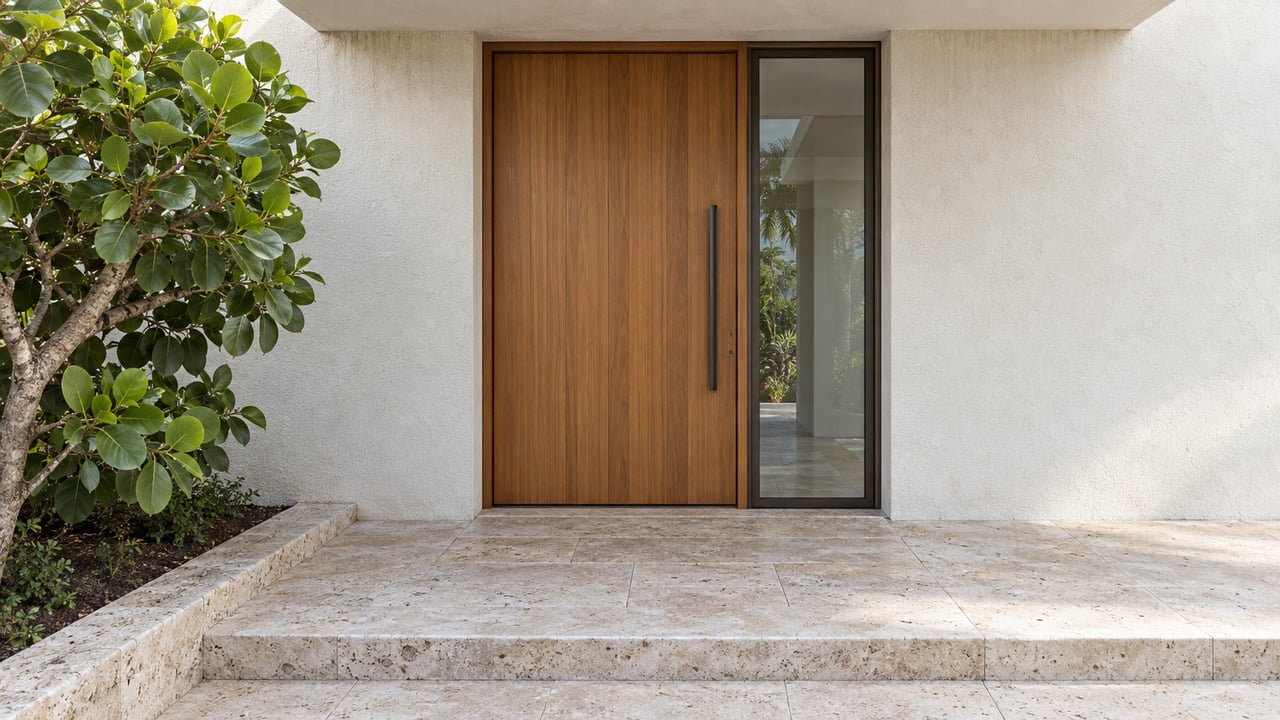
How Member Approval Shapes Every Sale in Lost Tree Village
October 1, 2026
October 1, 2026
Before a buyer in Lost Tree Village can get to a home inspection, a title search, or even a signed contract, someone else has to say yes first. Not the seller. Not the lender. The Property Owners Association's admissions committee, which reviews every prospective owner against a standard that has nothing to do with financing and everything to do with two sponsors, five personal references, a sit-down interview, and a $50,000 application check. Only after that approval clears can a sale close at all. The deeds themselves say a Lost Tree Village home can only be sold to another member of the association, which means the buyer pool for any listing here is never the open market. It is whoever the committee has already let in, or is willing to let in next.
That single fact rewrites almost everything else you'll read about this North Palm Beach community, starting with the sale price data.
The admissions process at Lost Tree Village functions less like a closing checklist and more like membership at a private club, because in practical terms that is exactly what it is. Reporting on the 2025 purchase by Cleveland Browns owner Susan "Dee" Bagwell Haslam described the community's vetting as "a process that requires two sponsors, five references, an interview with the admissions committee and a $50,000 check," all of it required before a sale can proceed. That reporting also confirmed what the deeds themselves stipulate: owners can only sell to other members of the association.
For a buyer, this means the usual due diligence timeline gets a new front-end step. Financing, inspection, and appraisal all still matter, but none of them move forward until the committee has already decided you belong here. For a seller, it means your actual market is not everyone who can afford the home. It is everyone who can afford the home and has already been approved, or is confident enough in their standing to apply and wait.
The Property Owners Association and the Lost Tree Club are separate structures with separate approval processes, and buyers frequently discover this only after they've already closed. Home ownership is required to apply for club membership, but ownership does not guarantee approval. Club admission requires sponsorship from two members who have known the candidate socially for at least two years, along with additional reference letters, and that application cannot even be submitted until after the residence purchase is finalized.
In practice, this creates a real scenario where someone owns a home inside the gates but has not yet been approved for the golf course, the beach club, tennis, or dining. Buyers who want to shorten that gap sometimes look for homes carrying a Founding Membership Certificate, a legacy designation held by roughly 25 remaining members that allows the certificate to transfer directly to a new owner without waiting for an Active Golf Membership slot to open. Those homes typically carry a premium precisely because they remove a wait that otherwise has no fixed timeline.
None of this shows up in a simple median price, which is exactly the problem with treating Lost Tree Village like a conventional market. Search three different real estate data pages for the community's average sale price in 2026 and you'll get three numbers that don't resemble each other at all.
| Reporting window | Average sale price reported |
|---|---|
| Cached data last refreshed in 2024 | under $4 million |
| Trailing 12 months through August 2026 | $17.4 million |
| Single 30-day snapshot, spring 2026 | just over $20 million |
The lowest figure is stale, built on cached listings from a period before recent record sales reset the ceiling. The middle figure reflects a thin sample, roughly eight closings across a full year, pulled from the shared multiple listing service that feeds most local search portals. The highest figure comes from an even smaller 30-day window, where a single high-value closing can swing the average by millions.
None of the three accounts for the sales that never touch the MLS at all, which in Lost Tree Village is a meaningful share of what actually trades.
The community's real price history in 2025 played out almost entirely outside public listings. In May, Canadian baby products entrepreneur Maurice Pinsonnault sold his oceanfront estate for a then-record $55 million, and that same month Boston Scientific chairman and CEO Michael Mahoney purchased a waterfront home for $17.3 million. That same year, the Haslams' purchase closed off-market at $25 million. None of these appeared as active listings with visible days on market. They surfaced only as closed transactions, after the fact.
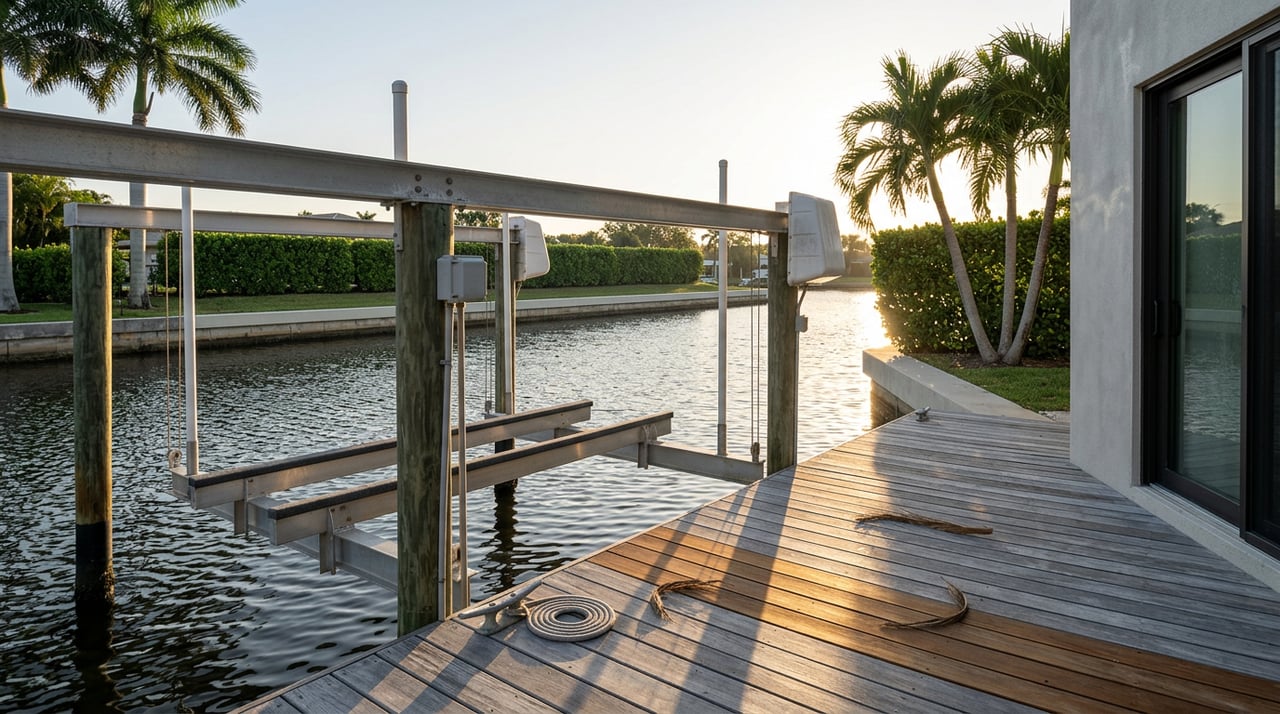
The ceiling reset again in December 2025, when William Wrigley Jr., an heir to the Wrigley chewing gum fortune, sold his 2.5-acre waterfront compound at 11465 and 11472 Old Harbour Road for $97.5 million. The buyer was fintech billionaire Ronald Clarke, chairman and CEO of the payments company Corpay. The deal closed December 12, 2025, and it never had a public listing history either. The property included two mansions, built in 2013 and 2014, and multiple private docks, a detail worth noting only because dockage capable of holding real boats, not just a water view, is what tends to separate a strong number from a record one in this stretch of the Intracoastal.
I represented the buyer in that transaction with Douglas Elliman, so I saw firsthand how a sale at that level moves from introduction to closing without a public listing. It is the kind of transaction that sets the community's real ceiling long before any aggregator's average catches up to it.
If you're a buyer, the math starts well before the purchase price. Beyond the home itself, expect the Property Owners Association's own fees, the $50,000 admissions application, and, separately, the equity buy-in and dues structure of the Lost Tree Club if golf and beach access matter to you. The community does not allow short-term rentals, so any plan to offset carrying costs with seasonal leasing will not work here. If you're eyeing a home built before the Florida Building Code took effect in 2002, budget extra time for wind and flood insurance underwriting, since older roofs can complicate that process.
The most practical advice, though, is social rather than financial. Because sponsorship and reference letters carry real weight in the committee's decision, buyers benefit from building relationships with current members well before writing an offer. That groundwork does more to shorten a timeline than any amount of extra earnest money.
If you're a seller, the same structure works in your favor in one specific way: your real buyer pool is smaller than the open market, but it is also more qualified by definition, since anyone circling your listing has either already cleared the committee or is prepared to. That changes how a listing should be marketed. A public MLS listing with wide exposure serves a different purpose here than it does in an open subdivision. Confidential, relationship-driven marketing to the existing membership and their networks often surfaces the real buyer faster than broad syndication does, which is part of why so many of the community's largest deals never appear as active listings at all.
What happens if a club application isn't approved after closing? Ownership of the home does not lapse, and Property Owners Association access, including community security and common areas, remains intact. What's lost is access to the golf course, beach club, tennis facilities, and clubhouse dining, since those are governed entirely by the separate Lost Tree Club membership structure.
How many Lost Tree Village homes actually come up for sale in a given year? Public data suggests it's a small fraction of the roughly 570 homes and condos in the community, and a portion of the transactions that do happen close privately before ever reaching a public listing.
If you're weighing a purchase in Lost Tree Village, or trying to figure out what your equity is actually worth to the specific pool of buyers who could qualify to own it, Donna Hutchins offers a confidential selling consultation built around exactly this kind of transaction.
Donna’s clients have placed their trust in her to handle the sale of their most valuable assets - their homes. She goes above and beyond for all her clients, emphasizing building and creating lasting relationships. With over 20 years of success working as a top-ranked luxury agent in New Jersey and Florida.