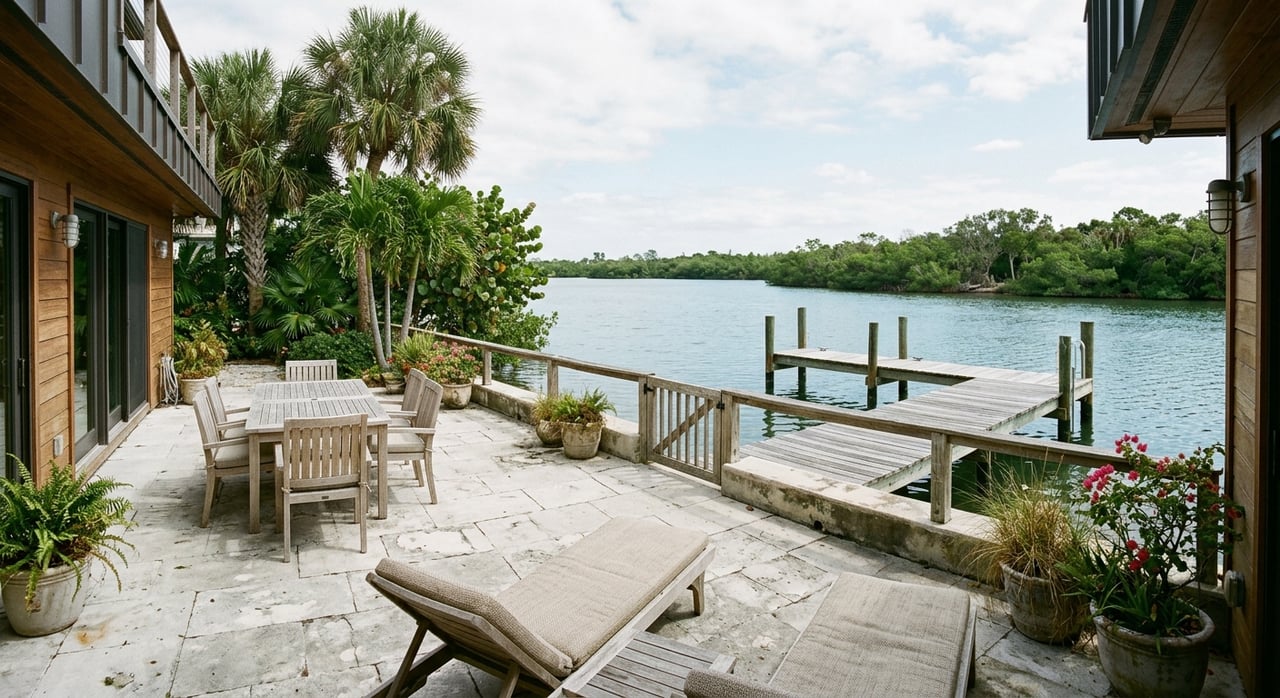
Buying Renovation-Ready Waterfront Homes In North Palm Beach
June 25, 2026
June 25, 2026
If you are shopping for a waterfront home in North Palm Beach, a dated kitchen or older finishes may not be the real story. On waterfront property, the bigger question is whether the home is truly renovation-ready or whether your plans could trigger a longer, more technical approval process. This guide will help you separate cosmetic opportunity from permit-heavy risk, so you can buy with more clarity and move forward with confidence. Let’s dive in.
A renovation-ready waterfront home is not just a property that needs visual updates. In North Palm Beach, the key issue is whether your planned work stays cosmetic or crosses into improvements that change how the property functions.
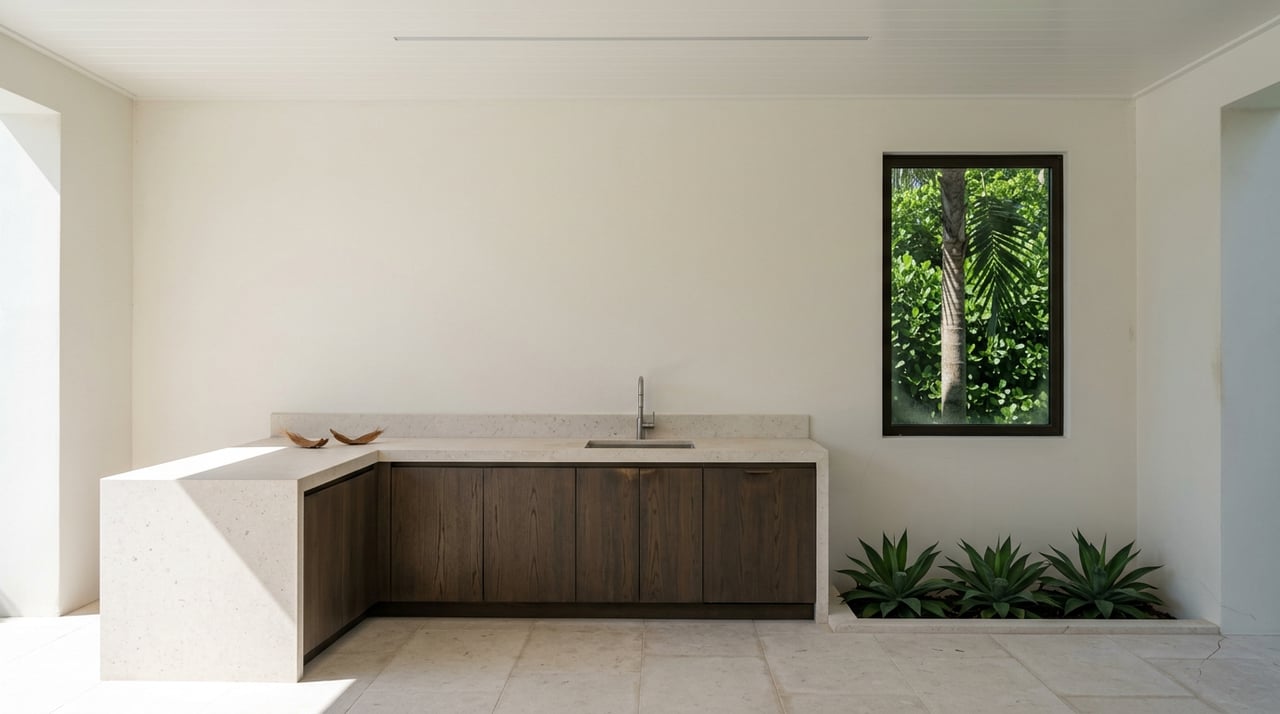
Cosmetic updates usually focus on appearance. Think paint, cabinetry, surface finishes, and other design changes that do not affect structure, flood compliance, drainage, or waterfront features.
More complex projects often involve windows, doors, roofing, HVAC changes, structural repairs, docks, boatlifts, or substantial work in flood-prone areas. The Village treats these as regulated improvements that typically require permits and professional review.
That distinction matters because older waterfront homes can look like an easy value-add at first glance. But if your vision includes marine improvements, major remodeling, or systems work, the timeline and budget may be shaped more by approvals than by construction itself.
On a waterfront purchase, design ideas should come after property verification. Before you focus on finishes or floor plans, you will want to confirm the records and site conditions that can affect cost, timing, and feasibility.
In North Palm Beach, that means reviewing the survey or site plan, flood zone, elevation certificate, permit history, and any prior waterfront work. These details can reveal whether a home is a clean cosmetic project or a more involved remodel.
For buyers planning to improve a dock, boatlift, generator area, fence line, or other exterior feature, a current survey or site plan can be especially important. The Village requires this documentation for a range of permit types.
Your first step should be understanding what already exists on paper. Permit history and prior approvals can help you identify past work and spot areas that may need closer review.
If a property has older waterfront improvements, you will want to know whether those features were previously permitted and whether your future plans might require updated review. This is especially important for docks, piers, and related structures, since local waterfront rules vary by waterbody and frontage.
Flood risk is a major part of buying a waterfront home in North Palm Beach. Palm Beach County says updated FEMA coastal flood maps became effective on December 20, 2024, and more than 16,000 county parcels were expected to see a Base Flood Elevation increase of one foot or more.
The Village has also noted that roughly 1,400 Village properties may be re-designated into AE flood zones. For buyers, that can affect renovation planning and may also influence flood-insurance costs.
Palm Beach County states that an Elevation Certificate is part of the permit record before a building may be occupied in a floodplain project. That makes elevation data more than just a technical detail. It can become a budgeting and planning issue early in your purchase process.
A major remodel on a waterfront home can become more complex if the property is in a floodplain. Palm Beach County states that work in a floodplain cannot proceed without a permit.
The county also defines a substantially improved structure as one where reconstruction, rehabilitation, additions, or other improvements equal or exceed 50 percent of the building’s market value. If your renovation crosses that threshold, the project may involve a very different scope of compliance than you expected.
This is one reason buyers should avoid assuming that an older waterfront home is automatically a straightforward remodel. The purchase price may reflect opportunity, but the true cost depends on what the property can support under current rules.
North Palm Beach does offer flood-related property protection consultations, including site visits and drainage evaluations. The Village also participates in the National Flood Insurance Program Community Rating System, which helps maintain a 25 percent reduction in flood-insurance premiums for residents.
At the same time, the Village notes that homeowners insurance does not cover flood loss and that AE-zone properties should expect higher flood-insurance rates. For buyers comparing two similar homes, flood classification can make a meaningful difference in long-term ownership costs.
In North Palm Beach, timing is often shaped by documentation and review rather than demolition and design alone. The Village uses online permitting through MGO, requires contractor registration before submittal, and no longer accepts paper permits.
The Village also states that plans submitted on or after January 1, 2024, must comply with the 2023 Florida Building Code, 8th Edition. For larger projects, this can mean more coordination before work begins.
For many substantial renovations, the Village asks for digital plans and, in many cases, signed and sealed plans. It may also require a current general liability and workers’ compensation certificate, along with a property survey or site plan.
For many permits above the valuation threshold, a recorded Notice of Commencement is needed before inspections can be scheduled. That is an important detail for buyers building a post-closing timeline.
If the property is a condominium, the Village also requests HOA approval at submittal for condo work. That can add another layer of coordination before your permit package is complete.
Waterfront remodels often require deeper review than standard interior renovations. For new structures, additions, or substantial renovations in Flood Zones A, AE, V, and VE, the Village requires detailed flood hazard and site information.
That includes flood hazard area delineation, floodway boundaries, base flood elevations, ground elevations, proposed locations and grades, fill details, and coastal construction control line information if applicable. The Village also requires notes on dune, mangrove, and watercourse impacts.
In coastal high-hazard areas, new buildings must be landward of the reach of mean high tide. For buyers, the takeaway is simple: site constraints can shape design decisions from the start.
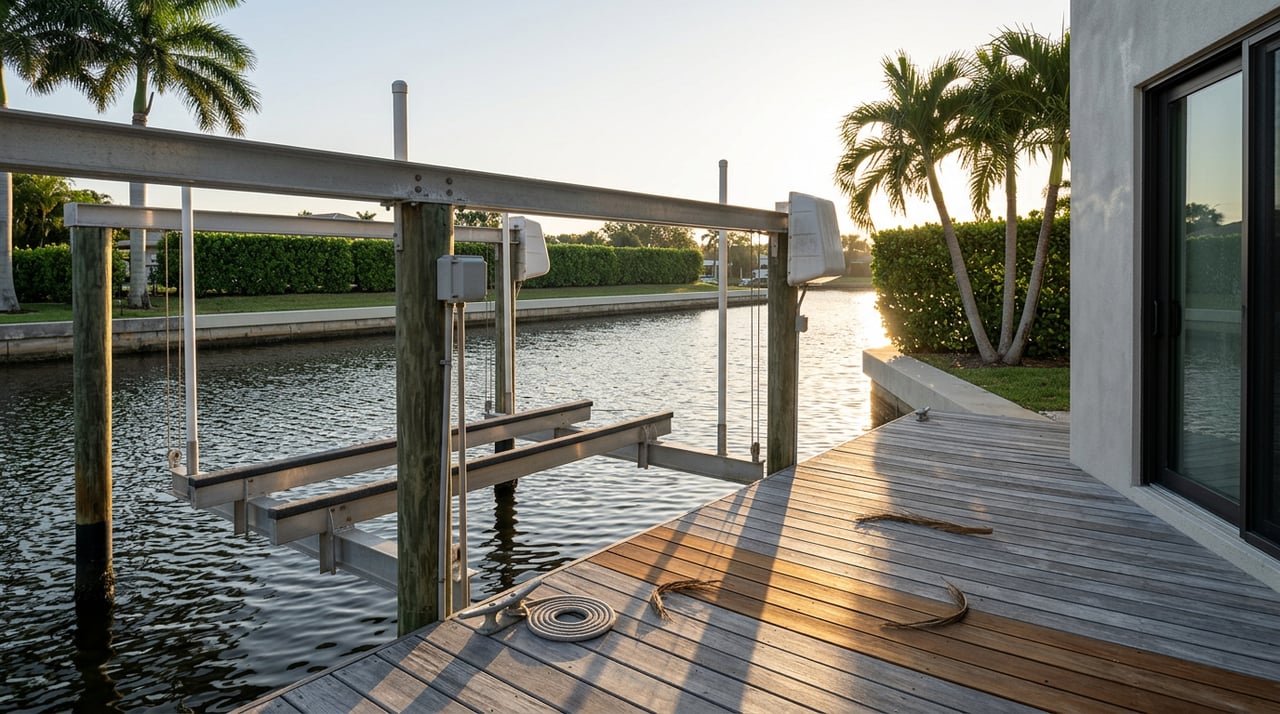
On many waterfront purchases, the dock setup is part of the value. But in North Palm Beach, marine features should be reviewed early, not treated as a small add-on to handle later.
Local code sets setback and extension limits based on frontage and waterbody. It also requires certain waterfront structures to be reviewed in relation to the face of the bulkhead rather than the seawall cap.
That means your vision for a new dock layout, boatlift, or expanded waterfront use may depend on measurements and code standards that are highly site-specific. A survey-and-permit conversation early in the process can save time and help you avoid unrealistic assumptions.
Association review is another part of the renovation equation that buyers should not overlook. If the property is in an HOA, Florida law allows architectural-control review of the location, size, type, or appearance of improvements only to the extent that authority appears in the declaration or published standards.
If the property is a condominium, the association generally bears responsibility for maintenance, repair, and replacement of common elements, subject to the declaration and any limited common element allocations. That difference can matter when you are evaluating what you can change and what approvals may be needed.
Association timing can affect both closing and post-closing renovations. Florida law requires HOA estoppel certificates to be issued within 10 business days of request.
For condominium ownership, assessments remain an important part of due diligence. Florida law states that condo owners are liable for assessments while they own the unit, and the association has a lien on each condominium parcel for unpaid assessments.
If you are considering an older waterfront condominium, recent Florida requirements deserve close review. The statute says many condo buildings that are three stories or higher must undergo milestone inspections when they reach 30 years of age and every 10 years after that.
For condo sale contracts entered after December 31, 2024, required disclosures include any milestone inspection summary and the association’s most recent structural integrity reserve study, or a statement that those items are not required or not completed. For buyers weighing renovation costs, these records can add useful context to the overall ownership picture.
When you find an older waterfront home with strong location and potential, it helps to evaluate it in layers. First, confirm the site facts. Then, pressure-test your renovation vision against permitting, flood rules, and association requirements.
A practical checklist includes:
The goal is not to avoid opportunity. It is to buy the right kind of opportunity, with a clear understanding of what the property will require.
In a market like North Palm Beach, the best renovation-ready waterfront homes are often the ones where the location, site conditions, and improvement path all align. When those pieces come together, you can move forward with more confidence and a better plan.
If you are considering a waterfront purchase and want a polished, detail-driven perspective on value, renovation potential, and property positioning, Donna Hutchins offers discreet, concierge-level guidance throughout the process.

Donna’s clients have placed their trust in her to handle the sale of their most valuable assets - their homes. She goes above and beyond for all her clients, emphasizing building and creating lasting relationships. With over 20 years of success working as a top-ranked luxury agent in New Jersey and Florida.