Buying A Historic Luxury Home In West Palm Beach
July 2, 2026
July 2, 2026
A historic luxury home in West Palm Beach can be a rare find: elegant architecture, established streetscapes, and a location that puts dining, arts, and the waterfront close at hand. If you are drawn to character but want to make a smart, confident purchase, you need more than curb appeal. You need to understand how district rules, future updates, and neighborhood context can shape the ownership experience. Let’s dive in.
Historic luxury homes in West Palm Beach offer something newer properties often cannot replicate: architectural identity tied to place. In many cases, the home’s value comes from both the residence itself and the surrounding streetscape, from mature trees and walkable blocks to the preserved scale of the neighborhood.
That setting matters in a market where lifestyle is part of the purchase. West Palm Beach highlights destinations and corridors such as Clematis Street, Flagler Drive, Northwood Village, Flamingo Park, El Cid, and Antique Row, while the downtown Arts & Entertainment District brings together more than 20 cultural destinations nearby.
For many buyers, that blend is the draw. You are not just buying square footage. You are buying into a setting with architectural continuity, cultural access, and a sense of permanence.
West Palm Beach says it has 18 locally designated historic districts and 46 individually designated sites. If you are shopping in this segment, understanding district identity is one of the first steps in narrowing the right fit.
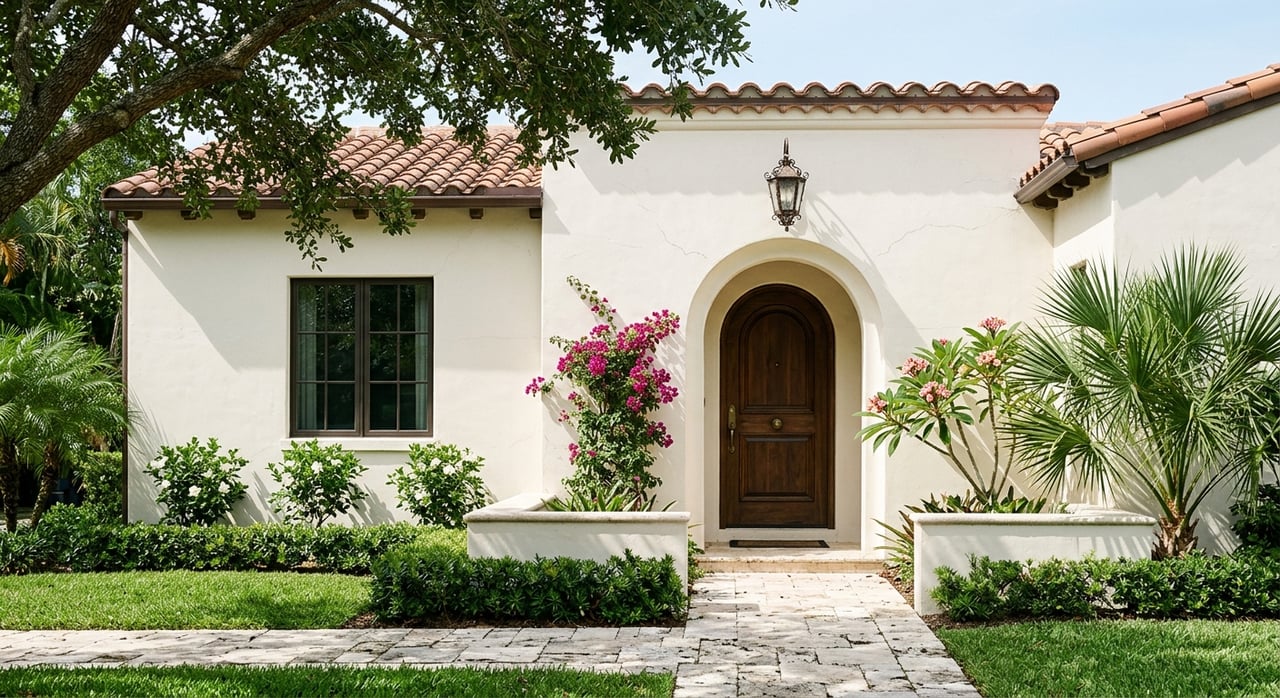
El Cid sits about one mile south of downtown West Palm Beach and is known for a strong concentration of high-style Mediterranean Revival homes. Most residences were built between 1921 and 1941, and many are large two-story houses with stucco finishes, clay-tile roofs, and generous parcels that can include double lots.
If you are looking for classic Palm Beach area architecture with a refined presence, El Cid often stands out. The neighborhood’s visual consistency is a major part of its appeal.
Flamingo Park is arranged on a traditional residential grid with sidewalks, low concrete retaining walls, and streets lined with palms and live oaks. Its dominant style is Mission Revival, though you will also find Mediterranean Revival, frame vernacular, and Minimal Traditional homes.
This district tends to appeal to buyers who value a neighborhood pattern that feels established and walkable. Details such as garages set behind homes and porte-cocheres add to the historic rhythm of the streetscape.
Old Northwood is a 22-block residential district north of downtown. Mediterranean Revival is the most prevalent style, but the district also includes Bungalow and Colonial Revival homes, creating a layered early-20th-century look.
For buyers who want variety within a historic setting, Old Northwood offers a broader mix of architectural expression. That can make it especially interesting if you are comparing style, lot layout, and renovation potential.
Mango Promenade is an approximately 30-acre district south of downtown that is primarily residential, with a corridor of commercial buildings on its western edge. It is composed mainly of Mediterranean Revival homes and is located near the Norton Museum of Art and the downtown edge.
The district also features pedestrian walkways that are unusual for West Palm Beach. If you want a historic home with close-in access to arts and downtown amenities, Mango Promenade deserves a close look.
In West Palm Beach, the house is only part of the equation. Historic luxury buyers are often looking for charm and convenience in the same purchase, and this market can deliver both.
Downtown destinations help support that lifestyle. The Kravis Center is near downtown, the Norton Museum of Art is on South Dixie Highway, and Northwood Village is described by the city as a premier design district and cultural hub with one-of-a-kind shops and restaurants.
That proximity can shape daily life as much as the home’s floor plan. Easy access to arts, dining, retail corridors, and waterfront drives is one reason certain historic neighborhoods continue to hold such strong appeal.
One of the most important parts of due diligence is confirming whether a property sits within a historic district or is individually designated. In West Palm Beach, exterior changes to historic structures must comply with the Historic Preservation Ordinance and Design Guidelines.
The city also notes that historic districts include both contributing and noncontributing properties, and owners cannot opt out once a district has been established. That makes it essential to understand the property’s status before you plan future work.
Interior remodeling is not reviewed by the city’s historic preservation process. Exterior work is different, and historic approval must be obtained before permits are issued for proposed changes.
For many buyers, this is the biggest adjustment when purchasing a historic home. If you are used to thinking only about design ideas and contractor timelines, you will also need to think about preservation review.
The city requires a Certificate of Appropriateness review for exterior changes. General maintenance that does not require a permit, such as house painting or minor exterior repair, does not need additional review.
Common alteration categories include:
Landscaping itself is not subject to historic review, but many outdoor features are. If your vision includes expanded outdoor living, privacy fencing, or new site features, it is wise to evaluate those plans early.
Historic luxury ownership often works best when your goals align with the home’s original character. West Palm Beach’s guidance makes that clear in several practical areas.
The city explicitly discourages vinyl for windows or fences. In historic districts, fences are generally expected to be wood board, wood picket, or aluminum, while vinyl and composite fencing are not permitted.
Roof materials also need to suit the architecture. The city says metal roofs may be appropriate for Craftsman, bungalow, or frame vernacular homes, but not for Mission, Mediterranean, Colonial, or Ranch-style houses.
For additions, the city says they are generally placed to the side or rear, stepped back from the front elevation, and designed so the new space is smaller than the main house and differentiated from the original structure. If you are considering expansion, that framework should be part of your buying analysis from day one.
Buying a historic luxury home does not mean giving up on comfort. It does mean making upgrades thoughtfully.
West Palm Beach points owners to the Secretary of the Interior’s Standards for Rehabilitation, which support style-sensitive work rather than generic remodeling. In practical terms, the goal is usually to preserve defining exterior features while improving how the home functions inside.
The city notes that historic buildings are exempt under the Florida Building Code from meeting energy requirements. It suggests sensitive improvements such as storm windows, added insulation, and better air sealing.
The city also recommends repairing original wood windows when possible, noting that they add character and can be more cost-effective than replacement. For a luxury buyer, that can be an important mindset shift: the best result is often careful restoration, not automatic replacement.
If a property is near the water or in a lower-lying area, flood review should happen early in the process. The city provides flood information with FEMA map references, and the city says its CRS Class 5 status equates to a 25% discount on NFIP policies issued in West Palm Beach.
Tax planning matters too, especially if you are budgeting a significant improvement program. The city says no direct financial assistance is currently available to private homeowners for rehabilitation, but qualifying historic properties may receive an ad valorem tax exemption for improvements if the owner applies before work begins.
These details can influence both carrying costs and renovation strategy. They are worth reviewing before you finalize your numbers.
With a historic luxury purchase, your due diligence should go beyond finishes and room count. You want to understand what you are buying today and what will be feasible tomorrow.
A strong review process often includes:
The right team matters here. A historic-preservation-savvy real estate agent, city preservation staff, an inspector familiar with older homes, and design and construction professionals with relevant experience can help you avoid expensive surprises.
Historic luxury homes require a more tailored buying strategy than a typical home search. You are evaluating architecture, location, preservation constraints, and long-term stewardship all at once.
That is where a design-aware, concierge approach can make a difference. When your advisor understands how presentation, architectural integrity, and neighborhood context influence value, you can make better decisions with more clarity and less friction.
If you are considering a historic luxury home in West Palm Beach, the goal is not simply to buy a beautiful property. It is to secure a distinctive asset that fits your lifestyle, your standards, and your plans for the future. For tailored guidance on Palm Beach County luxury real estate, connect with Donna Hutchins.
Donna’s clients have placed their trust in her to handle the sale of their most valuable assets - their homes. She goes above and beyond for all her clients, emphasizing building and creating lasting relationships. With over 20 years of success working as a top-ranked luxury agent in New Jersey and Florida.