Leave a Message

Thank you for your message. We will be in touch with you shortly.

Marina Access Options In West Palm Beach

January 15, 2026

If being on the water is part of why you love West Palm Beach, choosing the right marina access matters as much as choosing the right home. You want easy ocean days, secure moorage, and confidence during hurricane season. In this guide, you’ll learn how local marinas differ, how the Lake Worth Inlet shapes your routing, what slip features to verify for your boat, and how downtown marinas compare with gated marina communities. Let’s dive in.

Marina options at a glance

Public municipal marinas

City-operated facilities serve residents and visitors and usually sit inside Lake Worth Lagoon along the Intracoastal Waterway. You’ll often find walkable access to dining and culture, plus transient options for guests. For buyers who want a city lifestyle and provisioning convenience, these are practical and central choices.

Private commercial marinas

Private marinas range from basic dockage to full-service operations with fuel, pump-out, shore power, and concierge-style amenities. Slip leases and membership terms vary by operator. If you value services on site and reliable infrastructure, these are strong candidates.

Gated-community marinas

Some condominium communities and waterfront neighborhoods include marinas managed by an HOA or yacht club. Slips may be deeded or leased, and security is more controlled. These settings suit owners who want a quieter basin, reserved moorage, and community amenities, subject to HOA rules.

Superyacht yards and transient docks

For larger yachts, specialized facilities cluster in northern Palm Beach County and the Riviera Beach corridor, where deeper basins and heavy-lift capabilities are available. The Rybovich superyacht facility is a major regional resource for refit and service needs. Short-term visitors also have transient-oriented docks across the area.

Ocean access and the ICW

Lake Worth Inlet basics

The Lake Worth Inlet is the primary ocean entrance for West Palm Beach and Palm Beach Island. Most marinas serving downtown West Palm Beach are inside Lake Worth Lagoon on the ICW, so you’ll plan transits from the lagoon to the inlet for offshore runs. Before each trip, review NOAA nautical charts and NOAA tides and currents for Lake Worth Inlet to confirm depths and timing.

Bridges, speed zones, and routing

This ICW segment includes a mix of fixed and movable bridges plus regulated no-wake and slow-speed areas. Sailboats and tall vessels should confirm air draft against fixed bridge clearances at mean high water. Your exact route depends on your slip location, channel markers, and any posted restrictions.

Transit time expectations

Time from a downtown marina to the inlet varies with distance by water, posted speed limits, and vessel speed. Bridge openings and peak-hour congestion can add waiting periods. Build in a margin for restricted-speed stretches and inbound/outbound traffic near the inlet.

Match the slip to your boat

Size bands for planning

  • Small recreational boats: up to about 30 ft
  • Midsize cruisers: about 30 to 50 ft
  • Large motor yachts: about 50 to 100 ft
  • Superyachts: 100 ft and larger

These ranges are planning guides. Always verify your vessel’s exact dimensions against a slip’s published limits.

Key measurements to confirm

  • Slip length: Target a slip at least 2 to 5 ft longer than your LOA for small to midsize boats. For larger yachts, many owners prefer 5 to 10 percent extra length for maneuvering.
  • Beam clearance: Confirm the slip’s maximum beam and allow room for fenders. Wider vessels need more side clearance.
  • Draft and depth: Check charted depth at mean low water and the marina’s minimums. Aim for at least 1 to 2 ft of under-keel clearance in calm conditions; larger yachts or low-tide entries often need 2 ft or more.
  • Air draft: For sailboats and tall superstructures, verify fixed bridge clearances along your route. Some basins have overhead obstructions for certain slips.
  • Dock style and pilings: Floating docks rise and fall with the tide and offer easier boarding. Fixed docks can influence comfort and fendering strategy.
  • Mooring layout: End-ties, stern-in berths, and face docks each have different line plans and access needs.

Services that matter

  • Shore power: Confirm voltage and amp service at the slip, commonly 30A, 50A, or 100A, and how power is metered.
  • Fuel and pump-out: On-site diesel, gasoline, and pump-out save time and reduce off-dock trips.
  • Haul-out capacity: If your ownership plan includes yard periods, confirm travel-lift or synchro-lift capacities and any crane limits.
  • Onsite trades: Mechanical, electrical, rigging, and composite services nearby are vital for larger vessels.
  • Security: Gate controls, 24-7 staffing, CCTV, and guest access policies protect your asset.
  • Amenities and policies: Showers, laundry, provisioning, restaurants, and concierge support enhance usability. Review liveaboard rules, lease terms, transferability, quiet hours, and pet policies.

Hurricane, permits, and insurance

Hurricane-season readiness

Hurricane season runs June 1 through November 30. Ask about the marina’s storm plan, including haul-out options, high-and-dry storage, priority scheduling, and fees. Many insurers and marinas require documented tie-down plans and compliance with storm procedures. For general boating guidance and insurance considerations, consult BoatUS resources.

Permits and environmental rules

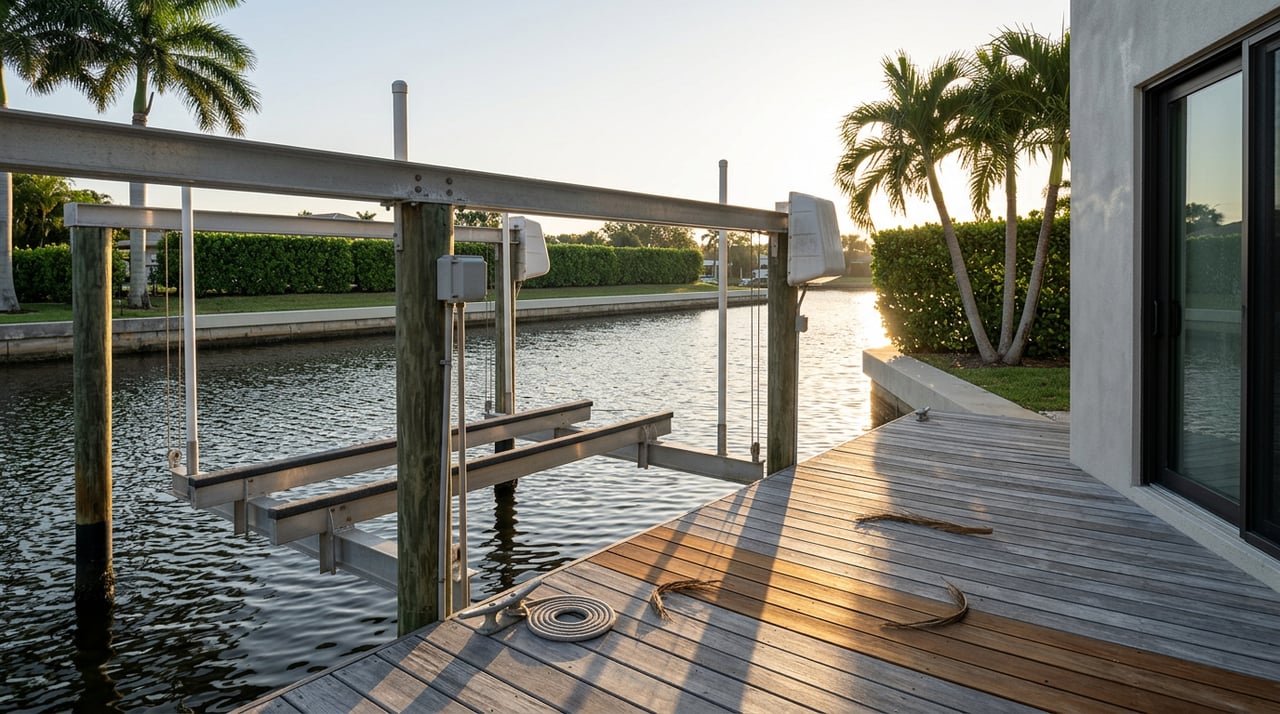
If you are buying a property with a private dock or plan to modify shoreline structures, expect layered approvals. Work in navigable waters often involves U.S. Army Corps of Engineers permit guidance, Florida Department of Environmental Protection coastal permitting, and local reviews via Palm Beach County permitting resources. Verify whether existing dock permits transfer and whether seagrass protection or dredging limits apply.

Insurance and documentation

Most marinas require proof of liability coverage and hull insurance, with higher minimums common for high-value yachts. Slip agreements outline owner responsibilities for lines, fenders, and emergency contacts. Before you commit, review transferability clauses, long-term cost obligations, and any storm-preparation fees.

Urban marinas vs gated communities

Downtown West Palm marinas

  • Pros: Walkable to restaurants, shopping, cultural venues, and transit. Easy provisioning and multiple transient options for guests.
  • Cons: Tighter maneuvering in busy basins, and deeper-draft or very wide vessels may face limitations. Inspect dock infrastructure and piling condition.

Gated marina communities

  • Pros: Controlled access and quieter basins with less transient traffic. Deeded or long-term reserved slips can simplify ownership, and some communities coordinate storm plans.
  • Cons: HOA rules can restrict vessel size, crew arrangements, or charter activity. Transfer rules and maintenance obligations may affect resale flexibility and costs.

Quick buying checklist

  • Does the slip fit your LOA, beam, draft, and air draft with safety margins?
  • What services are included and how are they billed? Confirm power specs, fuel, pump-out, Wi-Fi, and security.
  • Where is the nearest suitable yard and what are its lift capacities?
  • What are the lease or deed terms, transfer rules, waitlists, and resale considerations?
  • What is the marina’s hurricane plan and are there related fees or insurance requirements?
  • Are permits current for any private dock, and will they transfer upon sale?
  • Are location and transit times convenient for your typical runs to the Lake Worth Inlet?

Where to research availability

Marina capacity and policies change frequently. For current slip options, transient availability, and market data, browse Dockwa and Marina Dockage, then confirm details directly with operators. For community-reported notes and general boating guidance, review BoatUS and pair that research with official NOAA charts and Notices to Mariners before you transit.

Work with a trusted local advisor

Choosing the right slip or dock is about more than convenience. It influences your daily routine, resale flexibility, and storm preparedness. If you’re weighing a downtown marina lifestyle against a gated marina community, or you plan to pair a luxury residence with deeded dockage, you deserve clear answers and a smooth process. For design-aware guidance and concierge support as you evaluate properties and marina access in Palm Beach County, connect with Donna Hutchins for a private consultation.
FAQs

How close are downtown marinas to the ocean?

  • Most West Palm Beach marinas sit inside Lake Worth Lagoon on the ICW, and the Lake Worth Inlet is the primary ocean egress, so transit time depends on distance, speed limits, bridge schedules, and traffic.

Will a 40 to 60 foot yacht fit locally?

  • Many commercial and private marinas in the area can accommodate 40 to 60 foot yachts, but you should confirm berth length, maximum beam, and depth at low tide with the operator before you commit.

Are there superyacht options nearby?

  • Yes. Specialized large-yacht yards and marinas operate in northern Palm Beach County and Riviera Beach, including facilities like Rybovich, with availability often limited and arranged in advance.

What should I expect for slip costs?

  • Pricing varies widely by location, vessel size, services, and season, with urban and island marinas typically commanding premium rates. Use directories like Dockwa and Marina Dockage and then confirm quotes directly.

What contingencies help when buying a home with a dock?

  • Include inspections for dock and seawall condition, verification of permits and transferability, evaluation of dredging needs, review of hurricane plan and fees, and confirmation of insurance requirements.

Work With Donna

Donna’s clients have placed their trust in her to handle the sale of their most valuable assets - their homes. She goes above and beyond for all her clients, emphasizing building and creating lasting relationships. With over 20 years of success working as a top-ranked luxury agent in New Jersey and Florida.