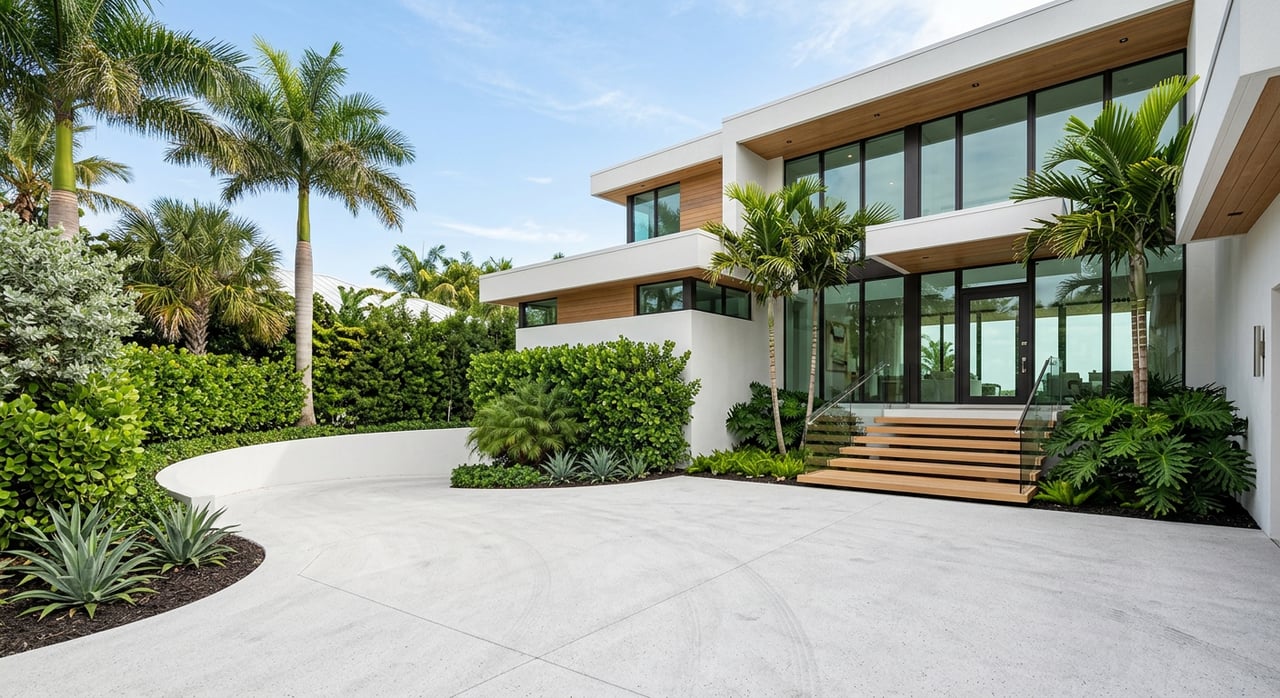
How Jupiter Island Luxury Homes Define Waterfront Value
March 5, 2026
March 5, 2026
What really moves price on Jupiter Island? When every estate is unique and the supply is scarce, it can feel hard to pin down value with confidence. If you are exploring a sale or eyeing a purchase in 33455, you deserve a clear, data‑aware way to think about price. In this guide, you will learn the specific site factors, design cues, and cost drivers that define value on Jupiter Island waterfront estates, plus a practical checklist you can use right away. Let’s dive in.
Jupiter Island sits in Martin County with a small land area, low density, and a limited number of private waterfront parcels. That scarcity is structural and helps explain why prices stay elevated year after year.
The Town also operates a formal Beach Protection District that funds erosion control and nourishment through a dedicated erosion tax. This ongoing public investment supports the visible beach profile and influences long‑term maintenance costs for beachfront owners. You can review the Beach Protection program and history on the Town’s site under the Beach Protection District.
At the top of the market, a handful of trophy trades set the ceiling. Greg Norman’s ocean‑to‑Intracoastal compound reportedly sold for about $55.1 million in 2021, illustrating the premium attached to very large, rare parcels with both ocean and Intracoastal frontage. See coverage of that sale in The Real Deal. More recently, a 2024 sale at 420 S Beach Road traded around $33 million, reinforcing how elevation, acreage, and protected water access pull prices to the high end.
Three orientations dominate Jupiter Island value discussions: pure oceanfront, Intracoastal, and ocean‑to‑Intracoastal. Double‑frontage estates are exceptionally scarce and often command the highest absolute prices because they pair sunrise ocean exposure with deep, protected water for serious boating.
Market shorthand often cites price per linear foot of oceanfront for trophy parcels. A broker‑publicized sale highlighted roughly $100,000 per ocean foot, which is a helpful directional metric. Treat it carefully, since acreage, improvements, docks, and Intracoastal value all share in the final price. For context on that linear‑foot framing, see this record sale press note.
Wider beach frontage and deeper lots give you privacy, room for guest structures, and the landscaping scale that defines a true compound. Larger acreage also lets you control sightlines and outdoor living experiences, which are core lifestyle drivers and price multipliers on the island.
Lots that sit higher above the base flood elevation typically trade at a premium. Elevation can reduce insurance costs, simplify permitting, and lessen expected long‑term mitigation needs like piling foundations or added freeboard. Always verify the site’s flood zone and BFE on the FEMA Flood Map Service Center and use the NOAA Sea Level Rise Viewer to visualize long‑horizon scenarios.
Seawall condition, dune stability, and any required restoration or groin work are immediate line items in your underwriting. On Jupiter Island, the Town’s Beach Protection District and erosion tax are unique local features to review as part of a purchase or sale plan. The Town’s Beach Protection page is a good starting point.
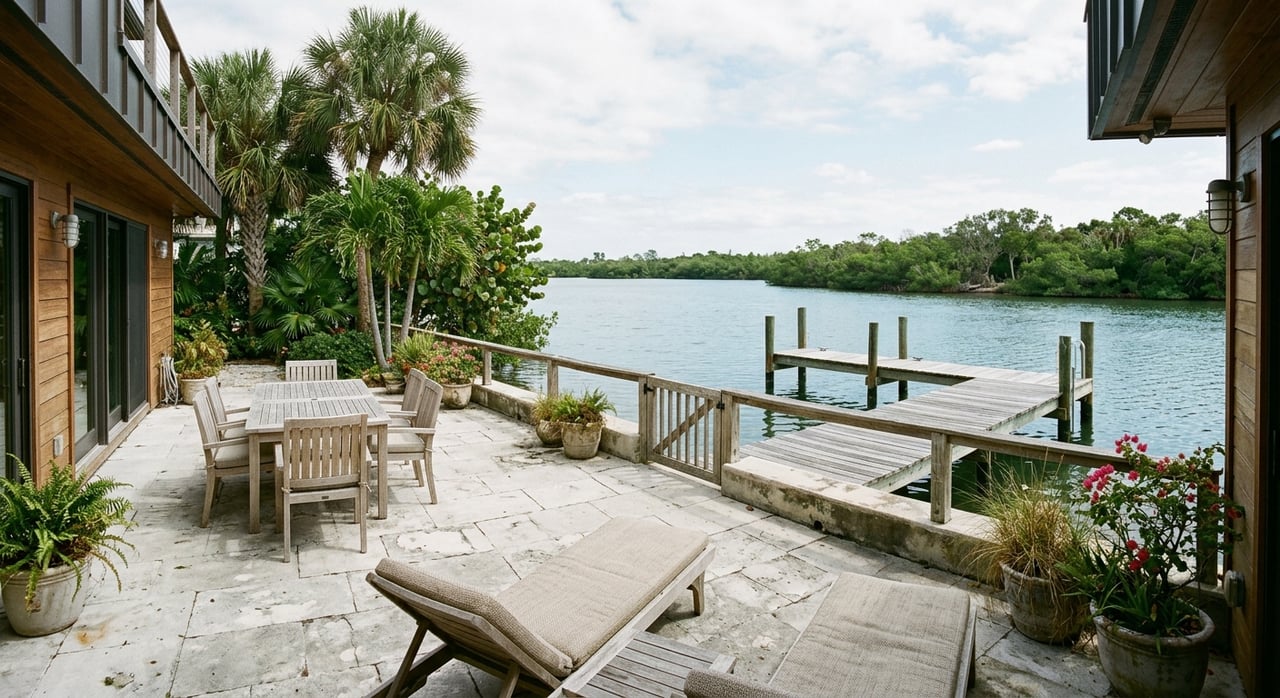
Buyers who prize boating place significant weight on dock length, lift capacity, and proximity to navigable channels. The ability to accommodate a vessel of meaningful length overall can change the demand pool and the price you can achieve.
Architectural pedigree and execution quality influence both price and time to sell. A turnkey estate by a respected architect or design‑build team often justifies a stronger number because it reduces replacement risk. By contrast, parcels marketed at land value signal a different calculus: you are paying primarily for the site and future potential.
Celebrity provenance can also shape demand. Homes tied to high‑profile owners draw outsized media attention and often stronger buyer interest. Recent coverage of celebrity‑owned South Florida properties underlines how provenance is used in marketing and how it can affect perceived value. For an example of how such narratives surface in the media, see reporting from Business Insider.
Flood insurance pricing under FEMA’s Risk Rating 2.0 is now more property‑specific and has changed premiums for many coastal homes. Replacement cost, elevation, and distance to water are among the factors used. If you are modeling carry, secure updated quotes early and consider private flood or surplus lines options when appropriate. For background on the shift to Risk Rating 2.0, review Bankrate’s explainer.
Florida’s coastal construction standards and local freeboard requirements can increase rebuild costs, especially in VE or Coastal A zones. This means a tear‑down may be more expensive than it looks on paper once you apply current code. For a sense of code direction and references, study Florida Building Code and coastal provisions as summarized in public code resources like this county code portal.
Property taxes and special assessments are significant for high‑end parcels and should be reviewed alongside the Beach Protection District levy where applicable. You can verify assessed values and tax history with the Martin County Property Appraiser.
Used well, a few simple metrics can help you compare estates without oversimplifying.
Use this quick framework to evaluate any Jupiter Island estate:
When you ground pricing in orientation, frontage, elevation, design quality, and carrying costs, you can compare exceptional properties more fairly. This approach keeps you focused on the features that affluent buyers value most and the real costs of owning on the ocean or Intracoastal.
If you are planning to sell, a design‑led, data‑aware strategy can spotlight your estate’s strongest attributes while addressing buyer underwriting questions up front. If you are buying, it clarifies when to stretch for a scarce feature like ocean‑to‑Intracoastal frontage or an unusually high‑elevation site.
Ready to discuss your property or your search on Jupiter Island? For confidential, concierge‑level guidance backed by deep local expertise, connect with Donna Hutchins.

Donna’s clients have placed their trust in her to handle the sale of their most valuable assets - their homes. She goes above and beyond for all her clients, emphasizing building and creating lasting relationships. With over 20 years of success working as a top-ranked luxury agent in New Jersey and Florida.